
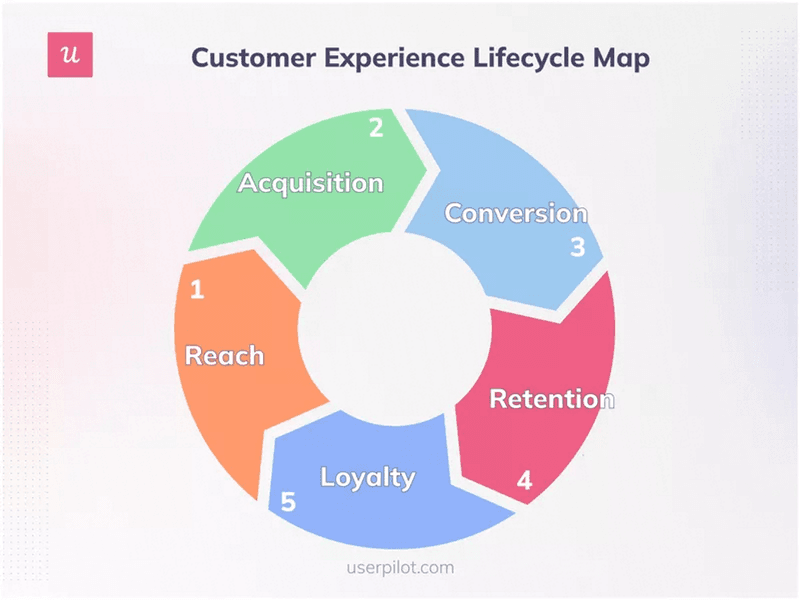
Understanding the complete journey of a customer within a Software as a Service (SaaS) model is paramount for long-term viability and expansion. SaaS lifecycle analysis offers a structured approach to examining every interaction point, from initial interest to sustained loyalty. By breaking down the customer experience into distinct stages, businesses can identify areas of strength, pinpoint weaknesses, and implement targeted improvements that lead to better customer satisfaction and increased revenue. This detailed examination helps companies adapt to market changes, refine their product, and build stronger relationships with their user base, ultimately contributing to a more stable and prosperous operation.
Overview
- SaaS lifecycle analysis maps the entire customer journey, from awareness to advocacy.
- It involves breaking down the customer experience into identifiable phases to understand engagement.
- Key metrics such as churn rate, customer lifetime value, and monthly recurring revenue are crucial for evaluation.
- Strategic optimization includes personalized onboarding, proactive support, and continuous product iteration.
- The use of specialized tools and a data-driven approach is vital for effective implementation of SaaS lifecycle analysis.
- Proper analysis leads to improved customer retention, higher customer satisfaction, and predictable revenue streams.
Understanding the Phases of SaaS Lifecycle Analysis
A robust SaaS lifecycle analysis typically divides the customer’s journey into several key phases, each with its own set of objectives and analytical considerations. These phases often include acquisition, activation, retention, revenue, and referral. Acquisition focuses on how new users are brought in, examining channels, costs, and initial engagement. Activation then assesses whether these acquired users successfully begin using the product or service in a meaningful way, often measured by key onboarding milestones. The retention phase is about keeping users active and engaged over time, minimizing churn and encouraging continuous usage. Revenue generation evaluates how users contribute financially, including initial subscriptions, upgrades, and cross-sells. Finally, the referral phase considers how satisfied customers become advocates, recommending the service to others. By studying each segment, a business gains a granular understanding of where customers might be falling off or excelling, allowing for precise interventions.
Key Metrics for Effective SaaS Lifecycle Analysis
To perform a meaningful SaaS lifecycle analysis, relying on specific, measurable metrics is non-negotiable. These indicators provide objective data on customer behavior and business performance across all stages. Essential metrics include Customer Acquisition Cost (CAC), which tracks the expense of gaining a new customer, and Customer Lifetime Value (CLTV), estimating the total revenue a customer is expected to generate over their relationship with the company. Churn rate, either customer or revenue-based, is critical for understanding retention challenges. Monthly Recurring Revenue (MRR) and Annual Recurring Revenue (ARR) offer a clear picture of financial health. Other important metrics involve usage frequency, feature adoption rates, expansion revenue (from upgrades or add-ons), and Net Promoter Score (NPS) for measuring customer loyalty. Collecting and correlating these metrics across lifecycle stages reveals patterns and insights that guide strategic decisions, ensuring efforts are focused where they will yield the greatest impact.
Strategies for Optimizing SaaS Lifecycle Analysis
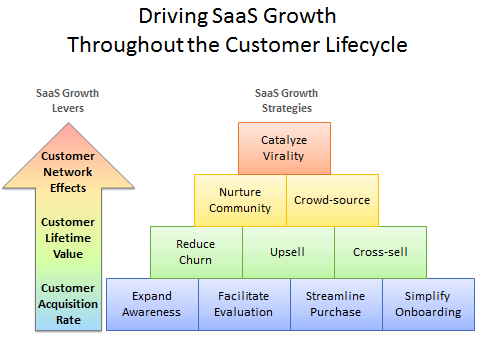
Optimizing a business’s approach to SaaS lifecycle analysis involves more than just data collection; it requires actionable strategies applied at each stage. For acquisition, A/B testing different marketing messages and channels can improve lead quality. In the activation phase, personalized onboarding flows and timely in-app guidance help new users experience immediate value. To bolster retention, proactive customer support, regular product updates based on user feedback, and loyalty programs can significantly reduce churn. Businesses can stimulate revenue growth by identifying upselling and cross-selling opportunities based on user behavior and segmentation. Encouraging referrals can be achieved through incentive programs and making it easy for happy customers to share their positive experiences. Many successful companies, including those in the US market, are increasingly using predictive analytics to foresee potential churners and intervene before they leave. A holistic view, combining qualitative feedback with quantitative data, allows for a more responsive and effective strategy.
Implementing Tools and Methodologies for SaaS Lifecycle Analysis
The successful execution of SaaS lifecycle analysis relies heavily on the right tools and methodologies. Customer Relationship Management (CRM) systems are fundamental, providing a centralized database for all customer interactions. Analytics platforms, such as product analytics tools and business intelligence dashboards, are crucial for tracking user behavior, measuring key performance indicators, and visualizing data trends across different lifecycle stages. Marketing automation tools can help personalize communication at scale, from onboarding emails to re-engagement campaigns. Beyond technology, adopting a data-driven culture is essential. This includes establishing clear processes for data collection, analysis, and reporting, as well as fostering cross-functional collaboration between product, marketing, sales, and customer success teams. Regular reviews of SaaS lifecycle analysis findings and iterative improvements to processes and product features ensure that the business continuously adapts and evolves based on factual insights rather than assumptions.


